Transform My Life
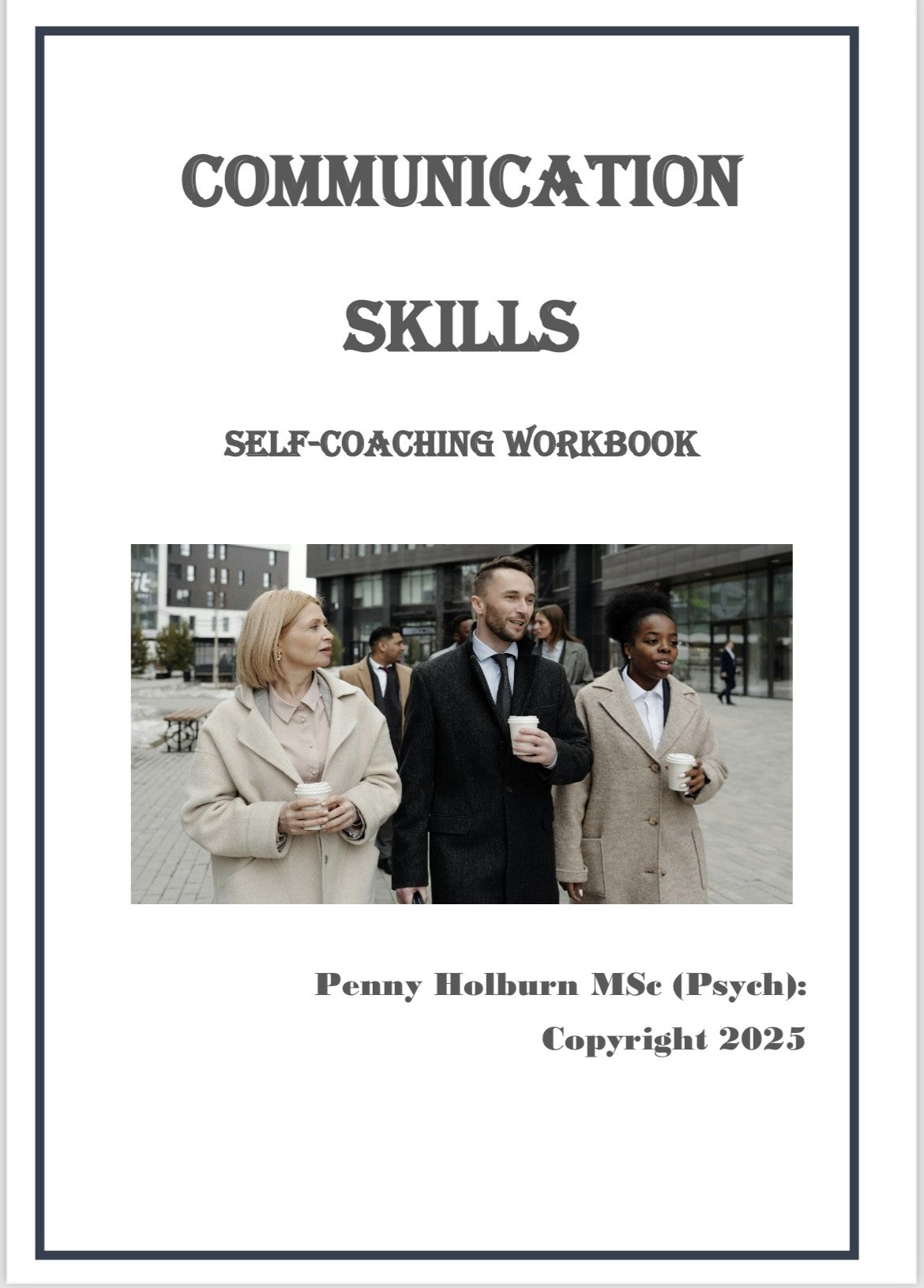
Communication Skills Self-Coaching Workbook
Communication Skills Self-Coaching Workbook
Couldn't load pickup availability
COMMUNICATION SKILLS SELF-COACHING WORKBOOK
100 A4 pages. Notes and Exercises/Practice
"I so loved going through the material, it is easy to understand and apply. As usual with your workbooks, I have learned so much and enjoyed this." ~ Catherine, IT Manager
One of the most important things you or I will ever do is communicate. Communicating is the way we start and maintain (and maybe even end) all our relationships in the work environment, in our personal lives, and in fact in any sphere of life. Without good communication skills you get nowhere. With excellent communication skills you can go far in life.
· If you want to be a good leader, you will never be one unless you can communicate well in all sorts of situations, including the really challenging ones
· If you want a good intimate relationship with your partner, it is not going to happen in the long term unless you are very good at communicating.
· If you want a happy family you need to be good at communicating.
· If you want your business to prosper, your staff to deliver, and your customers to be happy, you need to be great at communicating.
I have put together a workbook that contains both core and advanced communication skills. There is theory on tried and trusted communication techniques used in the workplace as well as counselling situations, and lots of opportunity to practice your communication so you can become highly skilled in communicating in many different types of situations.
In this book we will cover:
1. Looking at how you have learned to communicate.
2. Understanding your current communication patterns.
3. Understanding the communication patterns of those around you. Looking at what works and what does not work in your current communication patterns.
4. Understanding how different people interpret the world in different ways.
5. Understanding how our views of the world influence our communication – what we say and what we hear.
6. Understanding the influence of our beliefs and values on interpreting communication.
7. Understanding how we make assumptions in communication. Learning to stop making assumptions and really understand what is being said.
8. Poor communication – such as – passive-aggressive, put-downs, hostile, defensive, scapegoating, blaming, diversion, and dictatorial communication – and discuss how to improve it.
9. Three listening techniques are covered and three self-expression techniques are covered. The listening techniques are: 1) The Disarming Method, 2) Feeling and Thought Empathy Method, 3) Inquiry. The three self-expression techniques are: 1) “I feel” statements Method, 2) Behavioural Change Requests, 3) Stroking. There is lots of opportunity for you to practice using these techniques in your own real-life situations.
10. Handling communication in challenging situations when the other party is: In Conflict; Passive-Aggressive; Aggressive, Hostile or sarcastic; Stubborn and argumentative; Critical and judgemental; Demanding; and constantly complaining.
Share